





Somebody in a box room is standing there right now with a tape measure, wondering why the single bed they are about to order looks larger than the size shown on the mattress label. It is a fair question. Most size charts quote the mattress, not the complete frame around it — and that difference is where people get caught out.
A standard UK single mattress measures 90cm x 190cm (3ft x 6ft 3in). The assembled bed frame is usually wider and longer because of its side rails, headboard, footboard, upholstery or built-in features. Depending on the design, those details can add only a few centimetres or considerably more.
What is the actual size of a single bed frame?
The mattress is 90cm x 190cm, but a typical assembled single frame measures roughly 93–105cm wide and 195–210cm long. Slim metal or divan designs stay closest to the mattress footprint; upholstered, Chesterfield and TV beds generally need more room. Always use the product’s listed overall dimensions before ordering.
What is the standard single bed frame size?
The UK standard single size is built around a 90cm x 190cm mattress. That sleeping area is fixed, but the external frame is not. Two beds described as “single” can hold exactly the same mattress while having noticeably different assembled dimensions.
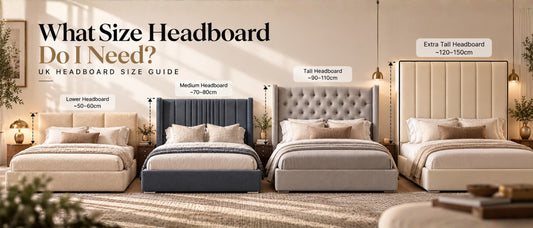
A simple frame may be close to 96cm wide and 198cm long. A padded or decorative design can be wider, longer and taller. This is why the overall width, length and headboard height shown on the product specification matter more than the mattress label when you are planning the room.
Standard UK single mattress dimensions
• Small single: 75cm x 190cm (2ft 6in x 6ft 3in)
• Standard single: 90cm x 190cm (3ft x 6ft 3in)
• Long single: 90cm x 200cm — less common in the UK and useful for taller sleepers
These are mattress measurements. The frame sits around or beneath that footprint, so the assembled product will usually require additional floor space.
Single mattress size vs bed frame size
The mattress recess inside a standard single frame is designed for a 90cm x 190cm mattress. The external measurement includes everything outside that recess: side rails, posts, padding, headboard, footboard, legs and any integrated storage or TV mechanism.
As a practical planning range, most standard single frames fall between about 93cm and 105cm wide and 195cm to 210cm long. Decorative frames can exceed those figures. Check the exact product specification rather than assuming every 3ft bed uses the same amount of room.
How single beds compare with other UK bed sizes
|
Size |
Mattress |
Best for |
Planning note |
|
Small single |
75 x 190cm |
Young children, very narrow rooms |
Saves 15cm of width but may be outgrown sooner. |
|
Standard single |
90 x 190cm |
Children, teenagers, guests and solo adults |
The most widely compatible UK single size. |
|
Long single |
90 x 200cm |
Taller solo sleepers |
Adds legroom without increasing width; availability is more limited. |
|
Small double |
120 x 190cm |
Solo sleepers wanting more width or occasional sharing |
Adds 30cm of sleeping width and needs notably more floor space. |
How to measure your room for a single bed
The safest approach is to measure the full assembled footprint, not just the mattress. A room can look large enough on paper and still fail because of a skirting board, radiator, wardrobe door or tight staircase turn.
1. Measure the available floor space. Measure wall to wall at floor level. Rooms are not always perfectly square, and skirting boards reduce usable space. Mark out approximately 100cm x 205cm on the floor with masking tape, then compare that outline with the exact dimensions of the frame you plan to buy.
2. Allow comfortable clearance. Aim for at least 60cm of walking room along one accessible side of the bed. Around 70cm feels more comfortable. A slim bedside table may need roughly 45cm, while a bed positioned in a main walkway benefits from more space at the foot.
3. Check door and wardrobe movement. Trace the full swing of the bedroom door and wardrobe doors before choosing the bed position. Drawers, ottoman lids and TV mechanisms also need room to move; their operating clearance is separate from the bed’s resting footprint.
4. Measure the delivery route. Check the narrowest doorway, hallway turn, staircase landing and lift opening between the entrance and the bedroom. Flat-pack frames normally arrive in manageable boxes, while divan bases may arrive as larger solid or split sections.
5. Note radiators, sockets and windows. Do not let a padded headboard block a radiator, low window or the room’s only useful plug socket. Include the depth of skirting boards and radiator projections when planning the final position.
How bed style affects single bed dimensions
Style changes the footprint. Sometimes only slightly; sometimes enough to determine whether the bed fits at all.
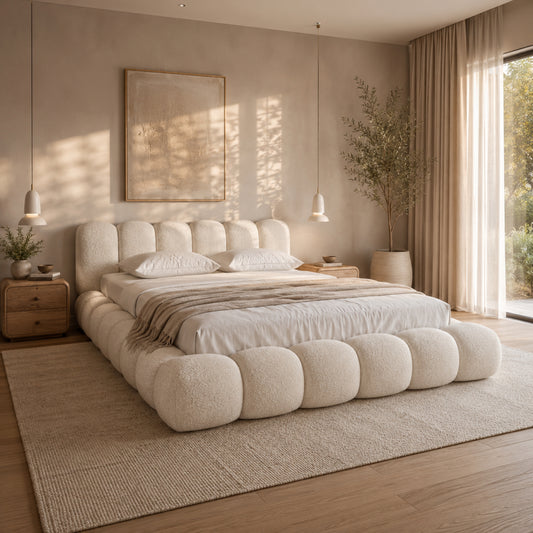
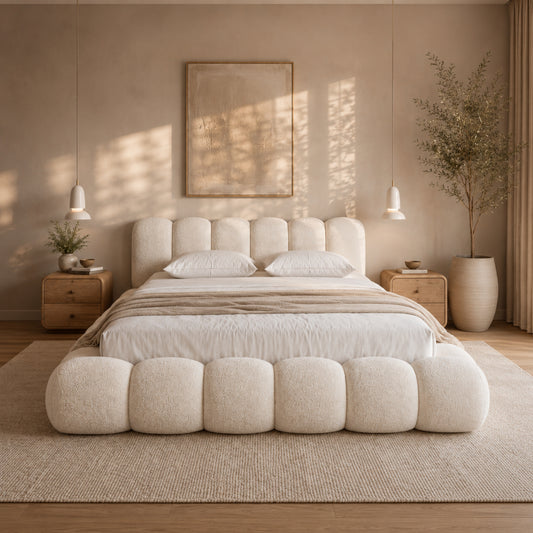
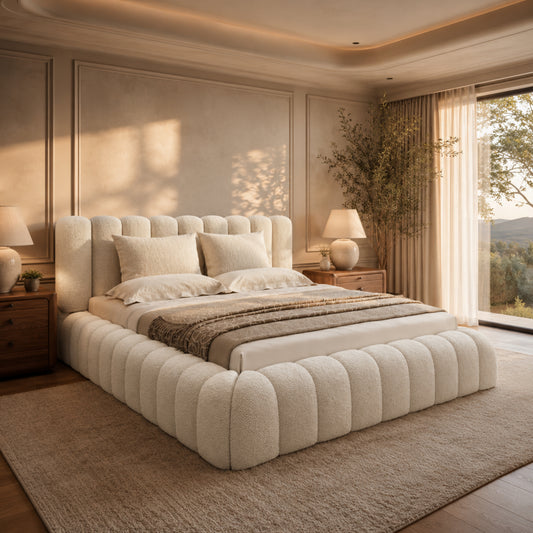
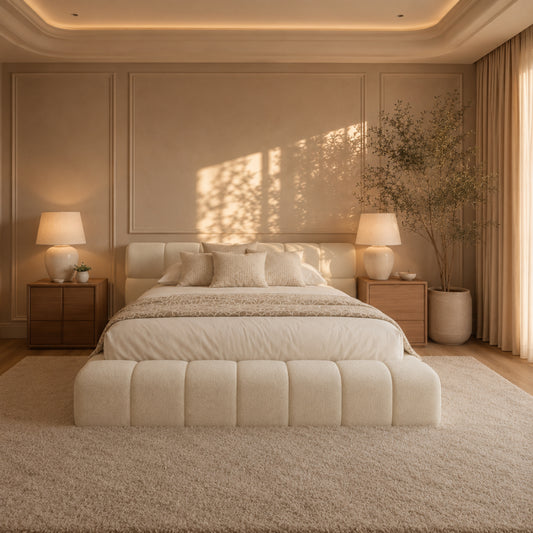
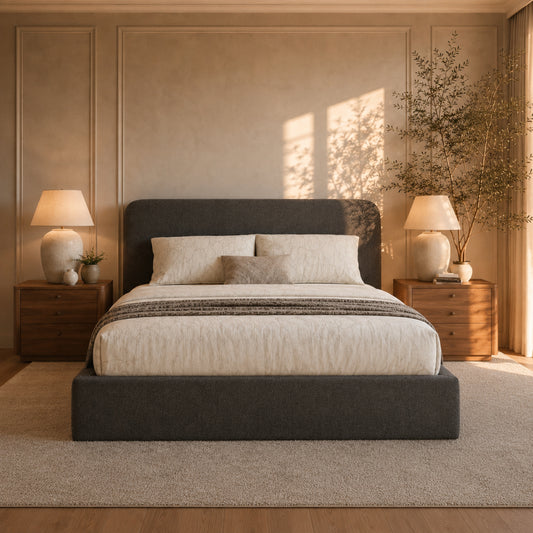
Fabric and upholstered: Upholstered fabric frames carry padding around the side rails and headboard, so they usually take up more room than a slim metal or wooden bed. Depending on the depth of the upholstery, the frame may add several centimetres to the width and extra depth at the head end. Measure the padded outside edge, not the internal mattress recess.
Chesterfield: Chesterfield beds use deep buttoning, padded side rails and often a rolled or winged headboard. That decorative structure can push the width beyond a standard upholstered frame and add noticeable length. They work best where the bed has enough free wall space to look balanced rather than squeezed between furniture.
Wooden: Wooden single frames typically stay closer to the mattress footprint than heavily upholstered designs. Many sit around 96–100cm wide and 198–203cm long, although thick posts or a substantial headboard can increase the size.
Metal: Metal frames often provide the slimmest external footprint because their rails and posts can be narrower. They are a useful option for box rooms, guest rooms and layouts where every centimetre matters.
Understanding single beds with storage
Storage changes more than the amount of space beneath the mattress. It can affect the height of the sleeping surface and the clearance needed to open the bed safely.
Bed height: A platform frame may sit around 25cm high before the mattress, while a storage base can be approximately 35–45cm high. Once a mattress is added, the total sleeping height may reach 60–70cm or more. This matters for young children, shorter users, low windows and sloped ceilings.
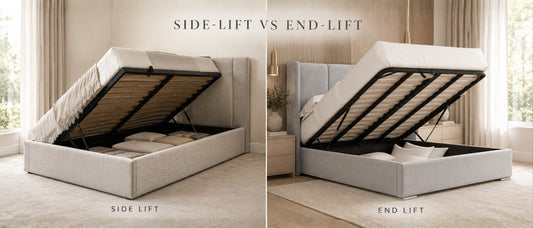
Ottoman clearance: The floor footprint of an ottoman bed may remain close to a standard single frame, but the lid needs operating space. A side-lift design may need around 90cm of clear space beside the bed, while an end-lift model may need about 100cm at the foot. The required lift arc varies by mechanism, so use the manufacturer’s instructions as the final measurement.
Divan base: A divan is one of the most space-efficient choices because the mattress sits almost flush with the base. A plain single divan may remain close to 90cm x 190cm, with additional length only where a separate headboard is fitted.
Ottoman vs divan: At rest both use a similar floor area, but an ottoman needs vertical lifting room while a divan needs clear floor space on the drawer side, so allow roughly 60cm for a drawer that extends 45–55cm.
Single TV bed dimensions
A single TV bed uses a deeper footboard to house the screen and lifting mechanism. The width may remain close to a normal single, but the overall length is usually greater. Depending on the screen and mechanism, a TV footboard may add around 20–35cm to the bed’s overall length. Some single TV beds can therefore reach roughly 215–225cm from head to foot.
To measure a small room for a TV bed: use the product’s complete assembled length including the footboard; check the raised screen height against windows, shelves and sloped ceilings; leave the manufacturer’s specified space around the footboard and lifting mechanism; and confirm the screen can rise while doors and wardrobes remain usable.
Frame and mattress compatibility
What fits a standard single? A UK standard single bed takes a 90cm x 190cm mattress. A European single is commonly 90cm x 200cm, which is 10cm longer and will not fit a standard UK recess. Always compare both measurements when mixing a frame and mattress from different ranges.
Does mattress depth affect bed height? Yes. Mattress depth does not change the floor footprint, but it changes the finished sleeping height and how much of the headboard remains visible. A deep mattress on a tall storage base may feel too high for a young child or may visually overpower a low headboard.
Mattress weight and ottoman mechanisms. Ottoman gas struts are selected for a suitable mattress-weight range. A mattress that is too heavy can make the platform difficult to lift; one that is too light may prevent the lid from closing correctly. Use the weight limit supplied with the individual bed rather than relying on a general estimate.
Choosing the right single bed for your room
Small bedroom or box room: Choose a slim metal or wooden frame, or a flush divan base. Deep upholstery, large wings and rolled headboards can reduce useful walking space. Mark the full frame footprint on the floor before ordering.
Guest room: A standard single offers broad mattress and bedding compatibility. Storage is useful for spare duvets and pillows, but make sure drawers or the ottoman lid can open without moving other furniture.
Children and teenagers: A standard single is usually a better long-term choice than a small single because it provides an extra 15cm of width. For a taller teenager, consider a 90cm x 200cm long single rather than a small double, since a small double adds width but normally keeps the same 190cm length.
When to choose a small double: A 120cm x 190cm small double adds 30cm of sleeping width but no extra length, so it solves a width problem rather than a legroom one.
Buying checklist
- Mattress size: confirm 90cm x 190cm for a standard UK single.
- External frame: check the listed overall width, length and height.
- Walking space: aim for 60–70cm along at least one accessible side.
- Door movement: trace bedroom and wardrobe door swings.
- Ottoman clearance: check the lift direction and required operating space.
- Drawer clearance: allow enough room for the full drawer extension.
- TV bed: include the deeper footboard and raised screen height.
- Mattress depth: add it to the base height to calculate the finished sleeping height.
- Delivery access: measure doors, hallway turns, stairs and landings.
- Room obstacles: note radiators, sockets, skirting boards, windows and sloped ceilings.
Frequently Asked Questions
What is the actual size of a single bed frame?
The mattress is 90cm x 190cm, while the assembled frame is normally wider and longer. Most frames fall around 93–105cm wide and 195–210cm long, but decorative and TV-bed designs can be larger.
How do I know whether a single bed will fit my room?
Measure from the skirting boards, use the complete assembled dimensions, and allow space for walking, doors, drawers or an ottoman lid. Marking the footprint with masking tape is a simple way to test the layout.
Is a single divan the smallest type of single bed?
A flush divan base is usually one of the most space-efficient options because its sides stay close to the mattress dimensions. A slim metal frame can also have a very small footprint.
Do storage beds take up more floor space?
Not always. Storage usually affects height and opening clearance more than the resting footprint. Drawers need side space, while ottoman beds need room for the lifting platform and the person operating it.
Does a single TV bed need a bigger room?
It normally needs more length because the lifting mechanism sits inside a deeper footboard. You must also check the raised screen height and the operating clearance around the foot end.
Should I buy a small single or a standard single for a child?
A standard single is generally the stronger long-term choice if the room allows it. The extra 15cm of width provides more comfort as the child grows and reduces the chance of needing an early replacement.
Will a 90cm x 200cm mattress fit a UK single frame?
No. A standard UK single recess is 90cm x 190cm. A 90cm x 200cm mattress is 10cm longer and requires a compatible long-single or European-size frame.
Getting the fit right
A single bed frame is never just the 90cm x 190cm number on the mattress label. The style, upholstery, storage system, headboard and footboard determine the real footprint. Measure the room, check the delivery route and compare the product’s full assembled dimensions before you order. Those few extra minutes with a tape measure can prevent a bed from blocking a door, crowding the room or failing to reach the bedroom at all.
Tags:
Previous
Small double bed size explained: is 4ft enough for two?
Next
What Is an Ambassador Bed? (And Will It Actually Fit Your Room?)