






A small double bed measures 120cm x 190cm, or 4ft wide by 6ft 3in long. That's the number most people land on this page looking for, so it comes first, not buried under three paragraphs of throat-clearing. In inches, that's roughly 48 x 75. Once you know that figure, the real question starts: does it actually work for your room, and for who's sleeping in it.
What counts as a small double in the UK
The UK small double bed size is fixed at 120cm x 190cm. A small double mattress is built to the same small double bed dimensions, so the frame and mattress should match without a gap or an overhang on either side. Some retailers list small double mattress measurements slightly differently depending on the mattress depth they build to — a slim mattress might sit around 20cm thick, a standard-depth mattress runs closer to 25-30cm, and a deep or extra-deep mattress can reach 30cm and beyond. That depth changes how the bed looks in a room, but it doesn't change the small double bed width or small double bed length underneath it.
A small double bed frame size stays constant at 4ft wide regardless of the frame style — wooden, upholstered, metal or fabric. What changes between styles is the footprint added by a headboard, footboard or storage base, not the sleeping surface itself.
Bedding needs matching just as carefully. A small double fitted sheet and small double duvet are cut for the 120cm x 190cm frame, not for a single or a double, so check the label before buying either. If your mattress runs deep or extra-deep, look for extra-deep fitted sheets with more sheet depth built into the elastic — a standard fitted sheet stretched over a thick mattress will pop off the corner within a week.
Why it's sometimes called a "3/4 bed" or "queen size"
Older UK bed size charts label this size a three-quarter bed, a four-foot bed, or occasionally a queen size bed UK — a habit that causes more confused searches than any other bed size term on this list. None of these names describe a different size. They all mean 120cm x 190cm. The "queen" label is where most of the confusion sits: a US queen bed measures roughly 152cm x 203cm, considerably larger than a UK small double, so if you've seen "queen" used online and assumed it matches a UK small double bed size, it doesn't. A European small double bed also runs longer, typically 120cm x 200cm instead of 190cm, which matters if you're ordering bedding from a European retailer.
Small double vs double — the real difference
| Small double | Double | |
|---|---|---|
| Width | 120cm (4ft) | 135cm (4ft6) |
| Length | 190cm | 190cm |
| Difference | — | 15cm wider |
For context against the rest of the UK bed size chart: a single bed measures 90cm x 190cm, a king size bed comes in at 150cm x 200cm, and a super king bed reaches 180cm x 200cm. The small double sits directly between single bed dimensions and standard double bed dimensions, which is exactly why it gets chosen — it's the size for a room that can't take a full double but has clearly outgrown a single.
Does 15cm actually matter in practice?
Fifteen centimetres sounds trivial on paper. In bed terms, it's roughly the width of a hardback book laid flat on each side of the mattress. Sleeping alone, you won't notice it. Sharing the bed, that missing 15cm is exactly where an elbow or a shoulder would otherwise have room to rest, so partner disturbance becomes more likely the moment two adults are involved. It's a small number with a real, physical consequence — not a rounding error.
Best rooms for a small double
A small double works because of its compact footprint, not despite it. Getting the room right matters more than the mattress spec.
Box rooms and second bedrooms
Most UK box rooms can't take a double bed frame and still leave room to open a wardrobe door or walk around the bed. A small double changes that. It leaves enough floor space for a wardrobe, a chest of drawers, and a proper walkway — usually 60cm of clearance is the minimum you want on at least one side for comfortable access.
Guest rooms that need to earn their space
A guest bedroom bed doesn't get used every night, so it has to justify its footprint the rest of the time. A small double gives an occasional guest genuine comfort while leaving space for a desk, an exercise mat, or storage boxes the other 350 days of the year. It's the best bed size for a room doing double duty.
Terraced and period-home bedrooms
Terraced houses and older properties often have narrower second bedrooms, sloped ceilings, or awkward alcoves that swallow up usable width before you've even placed a bed. A small double's narrower profile fits these irregular shapes far more reliably than a standard double, particularly where a chimney breast or bay window eats into one wall.
Small double for couples: realistic expectations
One adult sleeps on a small double with no complaints at all — full stretch, full comfort, room to spare. Two adults can use it, and plenty do, usually as a budget or space trade-off instead of a first choice. Each person gets meaningfully less width than they'd have on a double or a king, so if either of you moves a lot in your sleep, you'll feel it. That's not a reason to avoid a small double. It's a reason to be honest about what it's for: comfortable single sleeping, or workable occasional double occupancy, not the room-to-stretch-out feeling a double or king gives two people long-term.
Mattress support plays a part too. A firm, supportive small double mattress with proper pressure-relief helps offset some of the lost width, since a mattress that sags in the middle pulls both sleepers toward the centre and makes the space feel even tighter than it is. A pocket sprung or hybrid small double mattress with decent edge support keeps both of you nearer your own side. An orthopaedic small double mattress does the same job for anyone with back pain who still needs to share a narrower bed.
When it's worth sizing up to a double or king instead
If two adults are sharing every night, long-term, and the room can physically take it, a double or king is the better call. The 15cm jump to a double softens partner disturbance noticeably; the jump to a king removes it almost entirely. Size up when the room allows it and down only when space genuinely won't stretch further.
Small double with storage options
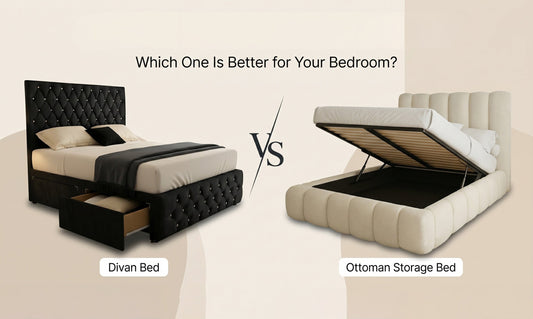
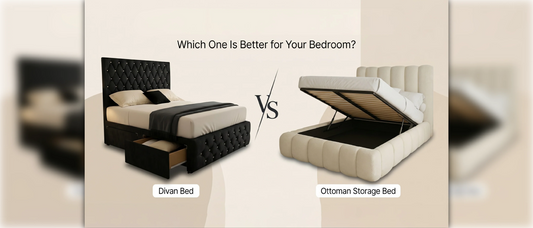
A small double bed with storage solves the one problem a small double can't solve on its own: limited floor space rarely comes with limited belongings. Two storage mechanisms dominate this size — ottoman and divan — and they solve the problem differently.
Small double ottoman — when the extra lift-storage earns its keep
A small double ottoman bed lifts the entire mattress platform on a gas-lift or hydraulic hinge, opening a full storage bay underneath. In a small room, that's often the only realistic place to keep bedding, seasonal clothes or luggage, since there's no floor space left for extra furniture. It earns its keep exactly where floor space is tightest.
Small double divan — the lower-profile, budget-friendly alternative
A small double divan bed keeps storage in drawers built into the base instead, giving quicker day-to-day access without lifting the mattress each time. It sits lower, costs less than most ottoman equivalents, and suits anyone who wants storage without the higher, heavier ottoman base. For a full breakdown of how the two mechanisms compare, our ottoman bed vs divan bed guide covers the drawer counts, weight limits and lift mechanisms in detail.
A small double bed, in the end, is a decision about a room's real limits, not a compromise. Measure the space, be honest about who's sleeping in it, and the right storage option follows naturally from there.
FAQs
What size is a small double bed?
A small double bed measures 120cm x 190cm (4ft x 6'3"). It sits between a single (90cm) and a double (135cm), making it 30cm wider than a single but 15cm narrower than a standard double. In the UK, it's also known as a 3/4 bed or, in older usage, a queen size bed.
Is a small double the same as a double bed?
No, a small double bed is not the same as a double bed. A small double measures 120cm wide, while a standard UK double measures 135cm wide — a 15cm difference. Both share the same 190cm length, so the size difference is in width only, not sleeping length.
Can a small double bed fit in a single room?
Yes, a small double bed fits comfortably in most single-designated rooms, including box rooms and second bedrooms. At 120cm wide, it needs roughly the same floor space as a single bed with some clearance, making it a practical choice for compact bedrooms, guest rooms, and terraced or period-home layouts with narrower proportions.
How much does a small double bed cost?
Small double bed prices in the UK typically start from around £150–£250 for a basic divan frame and rise to £400–£800+ for an ottoman storage bed or upholstered frame with premium fabric. Price depends mainly on frame type, storage mechanism, and fabric or finish. Check Deeplay Beds' small double range for current pricing.
Can I get a small double with storage?
Yes, small double beds are available with two main storage types: ottoman beds, which lift the entire mattress base to reveal storage underneath, and divan beds, which use drawers built into the base. Ottoman beds suit smaller rooms best since they don't need drawer-access space around the bed.
Can two adults sleep comfortably in a small double?
Two adults can sleep in a small double bed, but comfort depends on preference. At 120cm wide, each person gets around 60cm of space — noticeably less than a double or king. It works well for couples prioritising space-saving over room, or as a temporary or guest-room solution.
What is a small double bed also called?
A small double bed is also called a 3/4 bed, three-quarter bed, or queen size bed in older UK usage. These terms all refer to the same 120cm x 190cm dimensions. Some European retailers list a similar size as 120cm x 200cm, which is slightly longer than the UK standard.
Is a small double bed suitable for a teenager or adult child?
Yes, a small double bed is well suited to teenagers and adult children who've outgrown a single bed but don't yet need a full double. It offers more sleeping space than a single while still fitting comfortably into a typical UK bedroom, making it a common choice for growing families.
Tags: