



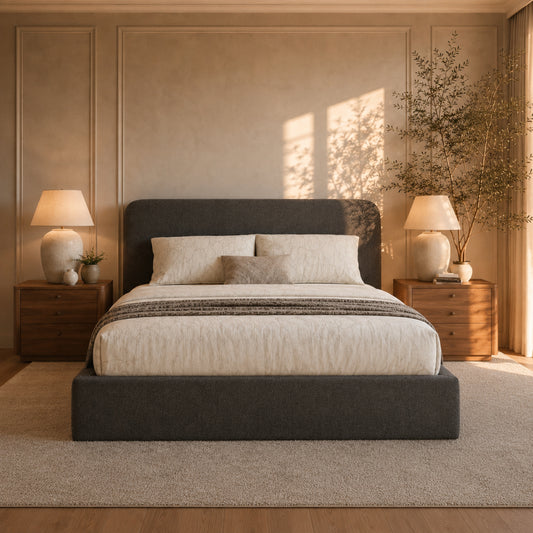
Bubble Bed Frames

From
£462
Clearpay
Klarna.
Pay in 4 instalments of
£116
Pay in 3 instalments of
£154
From
£511
Clearpay
Klarna.
Pay in 4 instalments of
£128
Pay in 3 instalments of
£170
From
£462
Clearpay
Klarna.
Pay in 4 instalments of
£116
Pay in 3 instalments of
£154
From
£524
Clearpay
Klarna.
Pay in 4 instalments of
£131
Pay in 3 instalments of
£175
From
£462
Clearpay
Klarna.
Pay in 4 instalments of
£116
Pay in 3 instalments of
£154

From
£509
Clearpay
Klarna.
Pay in 4 instalments of
£127
Pay in 3 instalments of
£170
From
£469
Clearpay
Klarna.
Pay in 4 instalments of
£117
Pay in 3 instalments of
£156
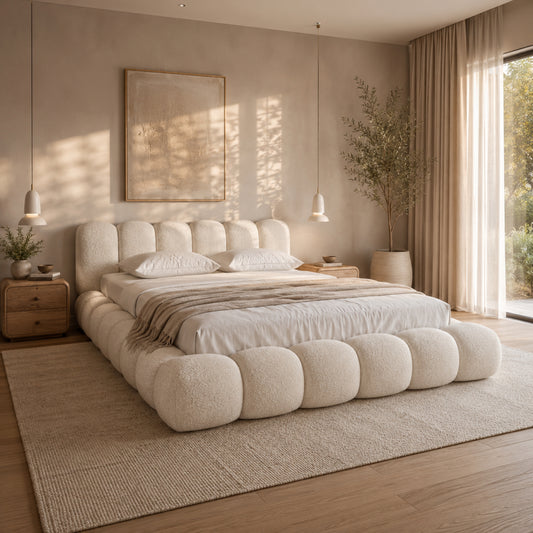
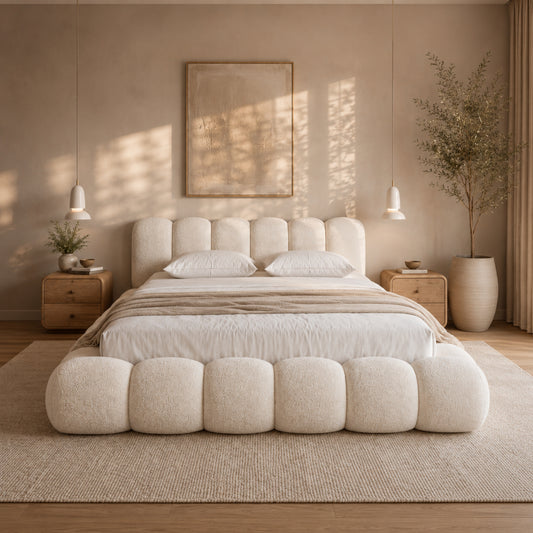
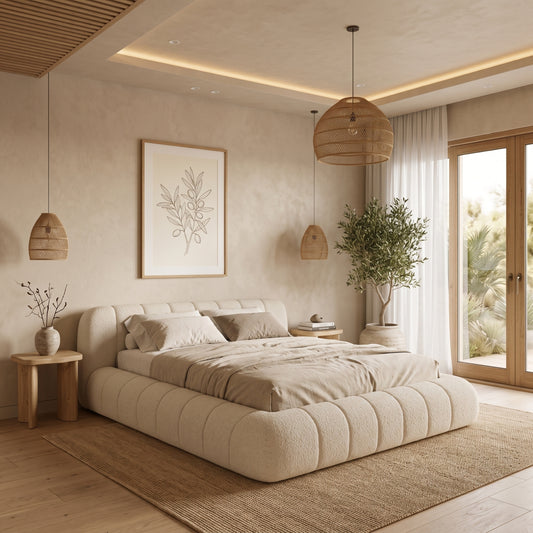
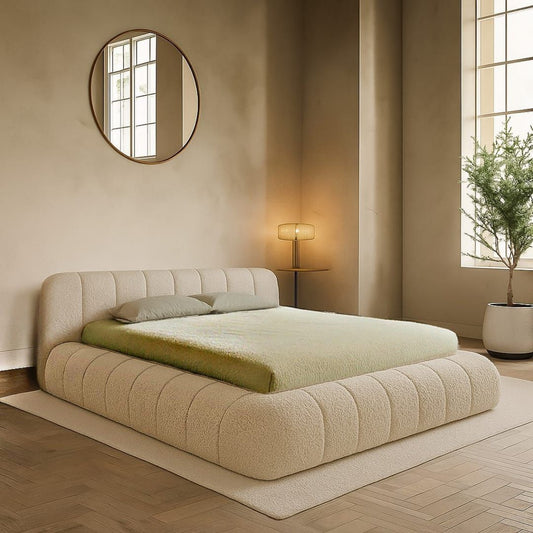
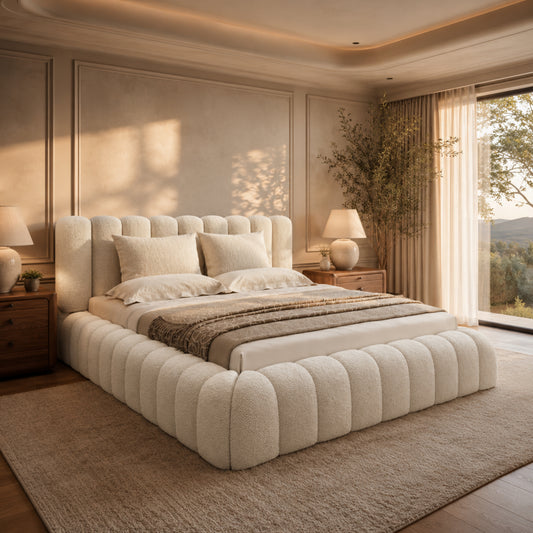
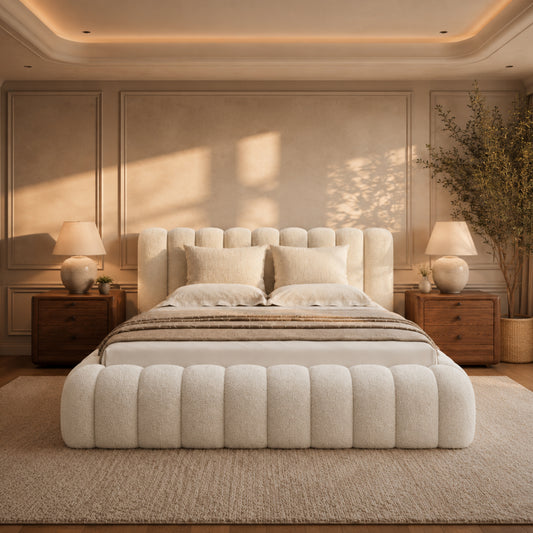
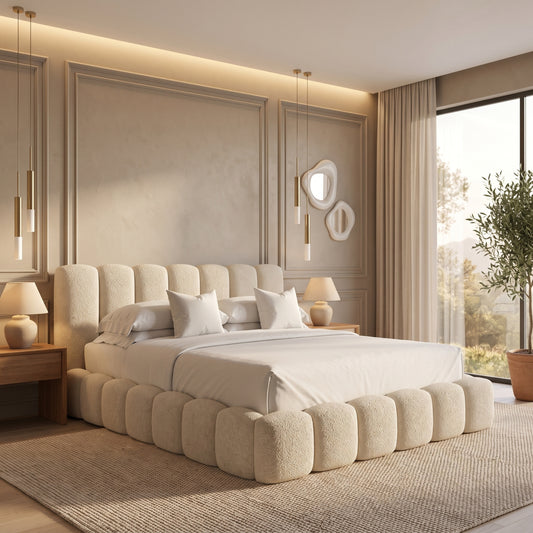
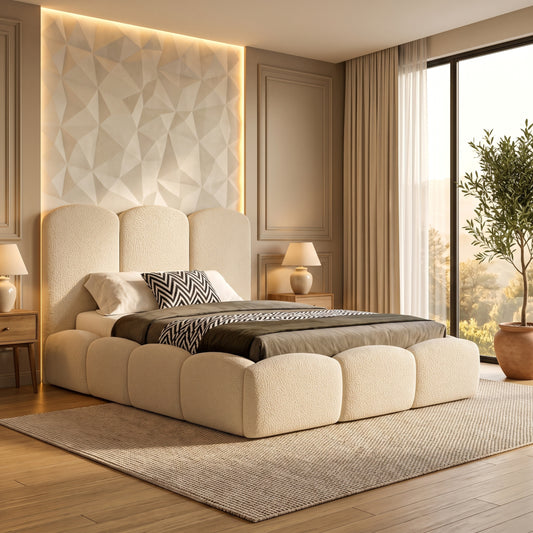
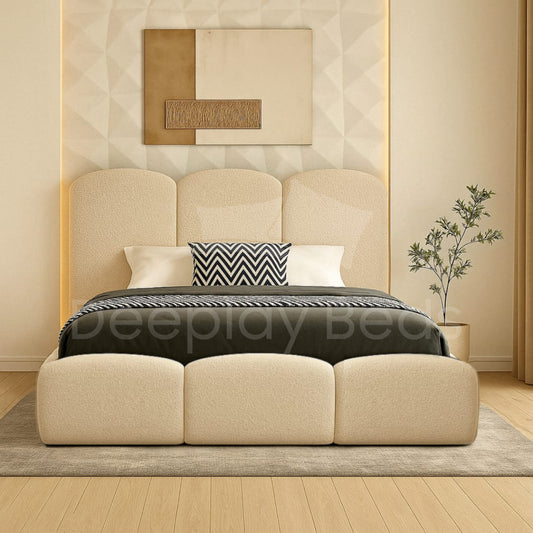
Bubble bed frames are upholstered beds with headboards stitched into soft, rounded sections instead of one flat panel. They have become one of the most requested styles in UK bedrooms over the last few years, partly because they look striking and partly because they are genuinely comfortable to lean against.
This collection brings our full range together, in bouclé and velvet finishes, in sizes from 3ft single to 6ft super king. Designs vary in how the padding is arranged and in whether they include under-bed storage, so it is worth reading the product page for the one you like.
Below you will find the things people usually ask us before ordering: how these beds compare to cloud beds, which fabric holds up best, and how much room a padded frame actually takes up once it is in place.
What Is a Bubble Bed?
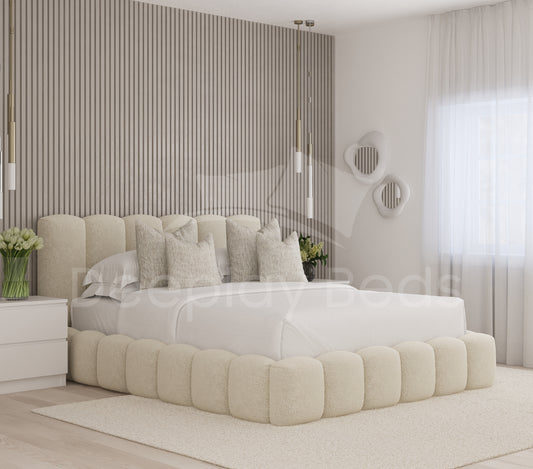
A bubble bed is an upholstered bed frame with a headboard divided into rounded, padded sections. The fabric is stitched into channels or panels and filled, so each section sits proud of the one beside it and the surface curves rather than sitting flat.
That construction is the whole point of the style. On a standard headboard, the padding is thin and even, and the decoration comes from buttons or piping. On these frames, the padding itself creates the shape, which is why they look soft from across the room and feel soft when you touch them.
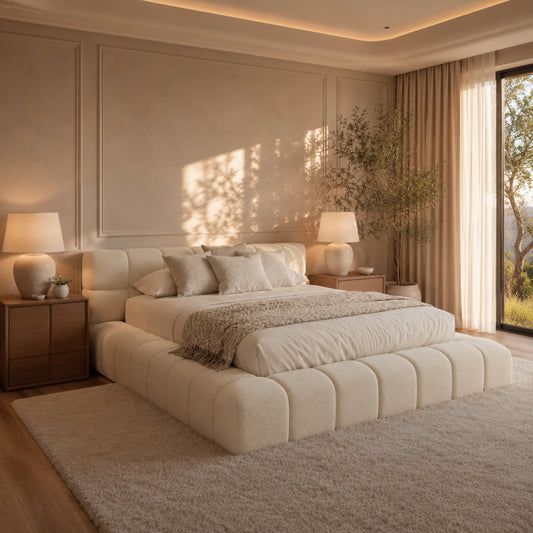
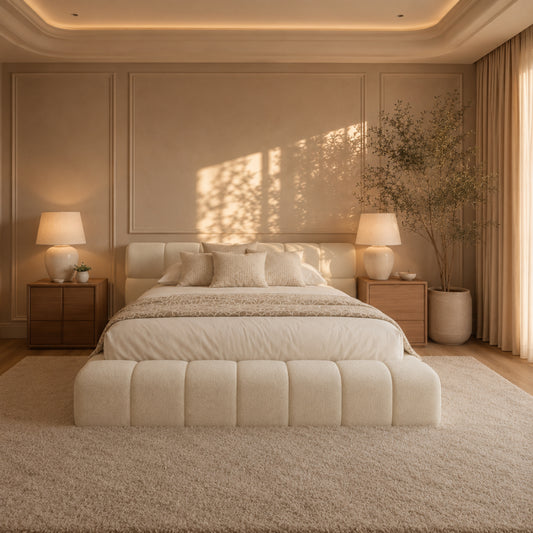
Some designs keep the rounded sections to the headboard alone. Others carry the same detail around the base of the frame, so the soft finish runs all the way round.
Are Bubble Beds and Cloud Beds the Same?
In practice, yes. Bubble bed and cloud bed describe the same style, and UK retailers use both terms because customers search for both.
There is a loose distinction if you look closely. "Bubble" is more often used for padding split into a larger number of smaller rounded sections. "Cloud" is more often used for fewer, chunkier tufted panels that give a softer overall outline. Neither is a technical term, and no manufacturer applies them consistently.
We list both under this collection for that reason. If you searched for one and expected the other, you are in the right place.
Why Have These Beds Become So Popular?
Three things are driving it, and only one of them is fashion.
The first is that they photograph well, which is why the style spread through social media faster than most furniture trends. The second is that soft furniture has come back generally, alongside bouclé chairs and curved sofas, so a rounded bed no longer looks out of place in a room.
The third is more practical. A padded headboard is comfortable to sit up against, and a lot of people read, work or watch something in bed. That is a daily benefit rather than a visual one, and it tends to be the reason people who own one recommend it.
Are Bubble Beds Comfortable to Sit Against?
Yes, and this is the main functional advantage over a wooden or metal frame. The padding gives you something to lean into without needing to stack pillows behind your back.
Two things affect how comfortable it feels in practice. Deeper padding is softer but means you sit slightly further forward, which matters if the bed already fills the room. And the shape of the padding changes where the support falls, so a headboard with wider, flatter panels gives you more even contact across your back than one with narrow raised sections.
If you sit up in bed most nights, treat this as a real buying criterion rather than a detail. Look at how the padded sections are arranged on the product images rather than only at the colour.
Which Fabric Should You Choose?
The shape of the bed stays the same across fabrics, so this decision is about how the room feels and how the bed will wear.
Is Bouclé a Good Fabric for a Bubble Bed?
Bouclé suits this style better than almost anything else. It is a woven fabric made from looped yarn, which gives it a soft, slightly nubby surface that catches light unevenly. That is exactly what you want on curved padding, because it picks out the edges of each section instead of flattening them into one block of colour.
The trade-off is texture. A looped weave holds onto dust and pet hair more than a smooth fabric does, so it needs occasional vacuuming with a soft brush attachment. Most people find that a fair exchange for the look, but it is worth knowing before you order rather than after.
When Velvet Works Better
Velvet gives the same shape more depth of colour and a smoother, more reflective finish. It suits larger rooms and darker schemes, and it tends to look more formal than bouclé does.
It also shows pressure marks where the pile is brushed the wrong way. Some people like that changeable quality and some find it irritating, so it comes down to preference rather than quality.
Light or Dark?
Cream and ivory keep a room feeling open and are the softest looking option, though they show marks more readily and are harder to spot-clean. Charcoal and grey are more forgiving in a busy household and give the bed more presence in a large room.
If your bedroom is small or gets little natural light, a lighter fabric will usually serve you better. A dark padded frame in a small room absorbs a lot of light and can make the space feel tighter than the measurements suggest.
What Size Bubble Bed Should You Choose?
Start with the frame, not the mattress. This is the single most common sizing mistake we see, and it is the reason a bed occasionally arrives and does not fit.
Why the Frame Is Wider Than the Mattress
Upholstered frames sit outside the mattress on all four sides, so the external footprint is always larger than the bed size name suggests. On our Capri and Aspen designs, for example, the measurements work out like this:
|
Bed size |
Mattress width |
External frame width |
Difference |
|
3ft single |
90cm |
112cm |
22cm |
|
4ft small double |
120cm |
142cm |
22cm |
|
4ft6 double |
135cm |
157cm |
22cm |
|
5ft king |
150cm |
167cm |
17cm |
|
6ft super king |
180cm |
203cm |
23cm |
Length works the same way. A 4ft6 double mattress is 190cm long, but the frame runs 213cm, so you need around 23cm more floor space than the mattress size implies.
Dimensions vary between designs, so check the table on the individual product page before you order. But the principle holds across every padded bed frame, from any retailer.
Will a Bubble Bed Make a Small Bedroom Look Smaller?
It can, but that depends more on the size you choose than on the style itself.
Upholstered furniture carries more visual weight than slim wooden or metal frames, because there is more surface area and no light passing under or through it. In a box room, that means a bubble bed will read as larger than a comparable metal frame even at the same size.
Two things help. Choose a lighter fabric, which reduces the visual bulk considerably. And be honest about the size. A 4ft6 double frame is around 157cm across, which leaves very little walking room in a bedroom under 2.6m wide once you allow space to get past. In that situation a small double often gives a better result than squeezing in a double, and you gain usable floor space rather than losing it.
Measure the walking route as well as the wall. You want at least 50cm to 60cm on the side you get in and out from, and enough room at the foot of the bed to open a wardrobe or a door.
Are Bubble Beds Available With Storage?
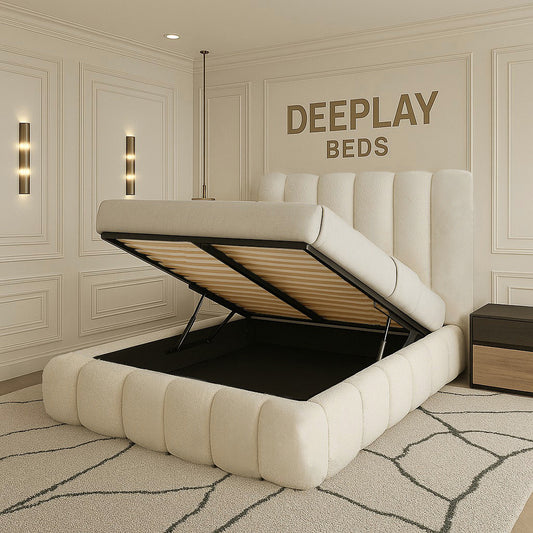
Some designs in this collection are built on ottoman bases, where the mattress platform lifts on a gas mechanism to reveal storage underneath. It is not a feature of every model, so check the individual product title and description rather than assuming.
If storage is your main reason for buying, there are two things worth knowing. These are low-profile platform frames, which means the base sits close to the floor and there is no gap to slide boxes into, so the built-in storage is the only under-bed space you get. And an ottoman base needs clearance in front of the bed to lift, so a bed pushed hard against a wall in a narrow room can be awkward to open.
If under-bed storage matters more to you than the padded shape, our ottoman beds collection gives you a much wider choice of designs built around it.
What Should You Check Before Ordering?
A short list, based on the questions we get asked most often after an order is placed rather than before.
- The external frame dimensions, not the mattress size. Width and length both.
- Headboard height against the wall behind. Radiators, window sills, dado rails and shelving are the usual culprits.
- Access to the room. Measure the narrowest point on the route in, including stairwell turns and any doorway that opens against you.
- Whether the design includes storage, since it varies between models.
- Recommended mattress depth. These frames take standard UK mattress sizes, and the recommended depth is 20cm to 30cm. Going much deeper changes how the headboard sits behind your pillows, and you lose some of the padded backrest you bought the bed for.
- Walking space on at least one side, and clearance at the foot for doors and drawers.
If you are buying a mattress at the same time, our mattress range is sized to fit these frames, so the two arrive matched.
How Do You Style One Without the Room Looking Busy?
Let the bed be the main event and keep everything else calm.
A padded frame with rounded detailing already has a lot going on visually. Patterned bedding, a gallery wall behind the headboard and a busy rug will all compete with it, and the room ends up feeling cluttered rather than soft.
Plain bedding in a tone close to the frame works well, with texture doing the work instead of pattern: waffle, linen or a chunky knit throw. Keep the wall behind the bed bare or nearly bare. If you want contrast, put it in the smaller items, like a lamp base or a side table in wood or dark metal, which stops the room from looking uniformly soft.
Who Is This Style For, and When Should You Choose Something Else?
It suits you if you sit up in bed regularly, you want the bed to be the focal point of the room, and you like soft, tactile furniture.
It is probably the wrong choice in three situations. If the room is genuinely tight and you need every centimetre, a slimmer frame will give you more usable space for the same mattress size. If you have pets that sleep on the bed, a looped or pile fabric will need more upkeep than you may want. And if you prefer a firm, structured look in a bedroom, a padded frame will always read as softer than you want it to.
In any of those cases, our wider upholstered bed frames range covers slimmer and firmer designs in the same fabric families.
Why Buy Bubble Bed Frames From Deeplay Beds?
We specialise in upholstered beds for UK homes, and this style is one of the ranges we get asked about most, which means we have answered most of the questions above many times over.
What that means in practice:
- Seven designs in the collection, in bouclé, velvet and linen finishes, in cream, ivory, light grey, charcoal grey and beige.
- Five UK sizes across the range, from 3ft single to 6ft super king.
- Full dimensions published on every product page, so you can check the external footprint rather than guessing from the mattress size.
- Flat-packed with fittings and assembly instructions included.
- Free UK delivery with Klarna available if you would rather pay in three instalments.
If you are stuck between two sizes or two fabrics, talk to us before you order. Sizing questions in particular are much easier to solve in advance than after a delivery.
Frequently Asked Questions
What is a bubble bed?
It is an upholstered bed frame with a headboard stitched into rounded, padded sections rather than one flat panel. The padding creates the shape, which is what gives the style its soft appearance.
What is the difference between a bubble bed and a cloud bed?
Very little. Both names describe the same style. "Cloud" is used slightly more often for designs with fewer, chunkier padded panels, and "bubble" for those with more numerous smaller sections, but the terms are not applied consistently by anyone.
Are bubble beds comfortable?
The padded headboard is comfortable to sit and lean against, which is the main practical benefit over a wooden or metal frame. Sleeping comfort comes from your mattress rather than the frame.
Do all bubble beds come with storage?
No. Some designs in this collection are built on ottoman bases with under-bed storage and some are not, so check the individual product page.
What fabric is best for a bubble bed?
Bouclé suits the rounded shape best, because its texture catches light and shows off the padded sections. Velvet gives a smoother finish with more depth of colour and works well in larger or darker rooms.
Are bouclé beds hard to keep clean?
The looped weave holds dust and pet hair more than a smooth fabric, so it benefits from occasional vacuuming with a soft brush attachment. Follow the care guidance on the product page for anything beyond that.
Are bubble beds suitable for small bedrooms?
They can be, as long as you size down rather than up. An upholstered frame is roughly 17cm to 23cm wider than its mattress, so measure the external width and leave 50cm to 60cm of walking space on the side you get in and out from.
What size bubble bed should I choose?
Work from the external frame dimensions on the product page rather than the mattress size. In a bedroom under about 2.6m wide, a small double usually gives a better result than a double.
What mattress fits a bubble bed?
Standard UK mattress sizes, with a recommended depth of 20cm to 30cm. Nothing bespoke is needed.