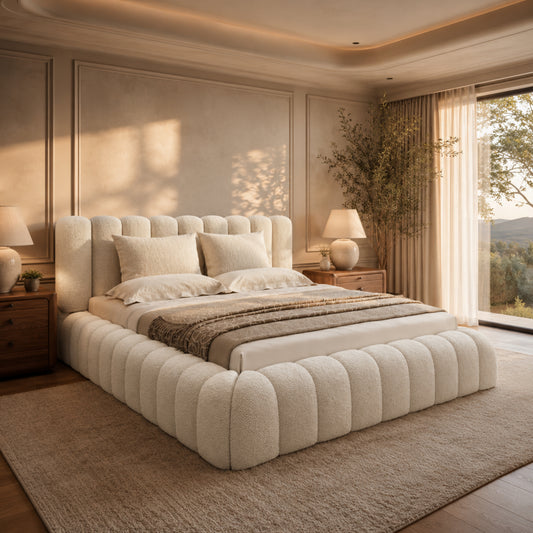




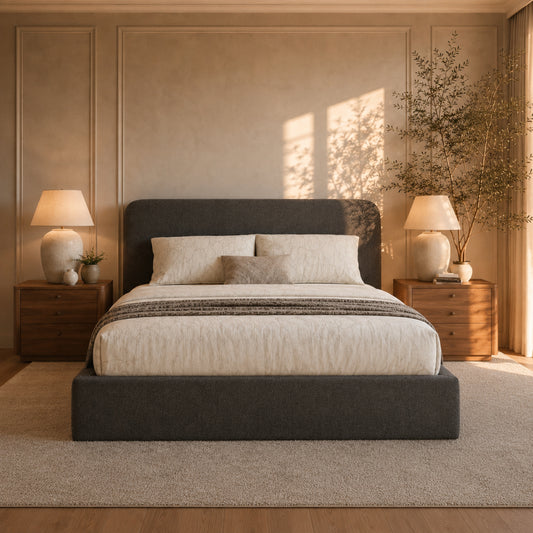



Choosing between a Small Double and a standard Double often comes down to one question: do you need the extra sleeping width, or would the smaller footprint work better in your bedroom?
Both mattresses are 190 cm long, but a Small Double is 120 × 190 cm while a Double is 135 × 190 cm. That 15 cm difference affects sleeping space, furniture placement and how much usable floor space remains around the bed. The right choice also depends on the complete bed frame, not just the mattress.
For the full range of UK sizes, see our Complete UK Bed Size Guide.
Small Double vs Double: Quick Comparison
|
Factor |
Small Double |
Double |
|
Standard mattress size |
120 × 190 cm |
135 × 190 cm |
|
Width difference |
15 cm narrower |
15 cm wider |
|
Length |
190 cm |
190 cm |
|
If shared equally |
60 cm per person |
67.5 cm per person |
|
Bedroom planning |
Uses less mattress width |
Needs more mattress width |
|
Bed-frame footprint |
Varies by design |
Varies by design |
|
Fitted sheet |
Small Double size |
Double size |
|
Common duvet size |
Often 200 × 200 cm |
Often 200 × 200 cm |
|
Storage options |
Ottoman, divan and other designs |
Ottoman, divan and other designs |
The table compares standard mattress sizes. The finished bed can be larger, particularly with upholstered frames, wide headboards, footboards and storage mechanisms.
What Is a Small Double Bed?
A standard UK Small Double mattress measures 120 × 190 cm. It is 30 cm wider than a Single and 15 cm narrower than a Double, while keeping the same 190 cm length.
This size can suit a single adult who wants more sleeping width than a Single, a teenager who has outgrown a Single, or a guest room where a full Double would use more floor space. It can also work for two people where the room is limited, but the available sleeping width is tighter.
If you want more detail about the size itself, read our Small Double Bed Size Guide.
What Is a Double Bed?
A standard UK Double mattress measures 135 × 190 cm. It has the same 190 cm length as a Small Double, but provides 15 cm more width.
That additional width can be useful when two adults share the bed regularly, or when one person prefers more room to move. It also needs to be considered alongside the rest of the bedroom because the bed frame may occupy more space than the mattress.
What Is the Difference Between a Small Double and a Double?
The main difference is width. A Small Double is 120 cm wide, while a Double is 135 cm wide. Both are 190 cm long, so moving from a Small Double to a Double adds width rather than extra legroom.
If two people shared the mattress equally, the simple width calculation would be 60 cm per person on a Small Double and 67.5 cm per person on a Double. Real sleeping positions are not divided so neatly, but the comparison shows what the extra 15 cm represents.
The mattress surface also increases from 2.28 m² on a Small Double to 2.565 m² on a Double. That extra area may be useful if you move around during sleep or want more personal space, but the room must still accommodate the larger bed.
How Much Extra Space Does a Double Give You?
A Double gives you 15 cm more mattress width than a Small Double. That may sound modest, but it is a permanent difference across the full width of the sleeping surface.
For one sleeper, the difference may be less important than the room layout. For two sleepers, the additional width gives each person more space in a simple half-and-half comparison. The useful question is not only how much larger the mattress is, but whether that extra width improves everyday use enough to justify the floor space it takes.
Small Double vs Double for Small Bedrooms
A Small Double can make sense in a smaller bedroom because its mattress is 15 cm narrower than a Double. That can leave more usable room for furniture and movement, but it does not guarantee that every Small Double frame will fit better.
The complete frame may be wider than the mattress because of the headboard, side rails, upholstery or footboard. A large upholstered Small Double can therefore take up more room than a slim-frame model.
A Double may still work in a compact room if the layout is efficient and the chosen frame has suitable external dimensions. The best way to compare them is to measure the actual frame rather than deciding from the mattress size alone.
Deeplay Buying Tip: Mark the full external dimensions of both bed options on the floor with masking tape. Then open the bedroom door, wardrobe doors and drawers and walk through the room as you normally would. This gives you a more realistic test of the layout.
Which Bed Gives You More Room Around Your Furniture?
The mattress is only one part of the bedroom layout. Check what happens to your wardrobes, drawers, bedside tables, radiators, doors and walking routes when the bed is in position.
A wider Double may reduce the space beside the bed, which can affect whether two bedside tables fit comfortably or whether a wardrobe door can open fully. A Small Double gives you 15 cm less mattress width, but the saving may be different once you compare two actual bed frames.
Where the room allows, around 60 cm of clear space on frequently used sides can make movement easier. Treat this as practical planning guidance rather than a fixed rule. The right amount depends on the room, furniture and how the space is used.
For a full measuring process, see our How to Measure Your Bedroom for a Bed guide.
Small Double vs Double: Mattress and Bed-Frame Dimensions
The 120 × 190 cm and 135 × 190 cm figures describe the mattress sleeping area. They do not tell you the complete external dimensions of the finished bed.
An upholstered bed can be wider or longer because of padded side rails, a substantial headboard, winged sections, a footboard or structural framing. Storage and TV mechanisms can also change the footprint.
This means two beds that both take a 120 × 190 cm mattress can have different external dimensions. The same applies to two Double beds that both take a 135 × 190 cm mattress.
Deeplay Buying Tip: Do not measure only the 120 × 190 cm or 135 × 190 cm mattress area. Check the width, length and headboard dimensions shown on the individual Deeplay product page before ordering.
Small Double vs Double for Couples, Single Sleepers and Guest Rooms
For couples
If two adults will use the bed every night, the extra width of a Double may be important. A Small Double gives 120 cm of mattress width, compared with 135 cm for a Double, so the choice comes down to how much sleeping space you want and how much bedroom space you can spare.
If the room cannot comfortably take a Double frame without blocking furniture or main walking routes, a Small Double may be the more practical size. If both sizes fit comfortably, compare the extra sleeping width with the way the room will function day to day.
For one adult
A Small Double can give one adult considerably more width than a Single without using the full width of a Double mattress. It can be useful in a compact main bedroom, teenager's room or guest bedroom where floor space matters.
A Double can also suit a solo sleeper who wants more room, provided the larger footprint does not interfere with the rest of the room.
For guest rooms
Think about who is likely to use the room. A Small Double leaves more floor space available for other furniture than a Double, while still giving a solo guest plenty of sleeping width. A Double gives occasional couples more width but needs more room.
If the room needs to work as both a guest bedroom and another useful space, such as a study, the smaller mattress may leave more flexibility. The final choice should be based on the actual room layout.
Which Bed Has Better Storage Options?
Neither size automatically has better storage. Both Small Double and Double beds are available with different storage designs, and the amount of usable storage depends on the individual frame.
An ottoman bed lifts the mattress platform to provide storage underneath. This can be useful when you want to use the space below the mattress without needing a bank of drawers beside the bed.
A divan bed can use built-in drawers instead. Drawers are convenient for items you access often, but you need enough space for them to open fully.
If under-bed storage is part of your decision, compare our Ottoman Beds collection and check the opening direction, external dimensions and product-specific storage details.
What Bedding Fits a Small Double and Double Bed?
Fitted sheets need to match the mattress size. A Small Double mattress is 120 × 190 cm, while a Double mattress is 135 × 190 cm, so fitted sheets should be bought for the correct size.
A common UK duvet size for both Small Double and Double is 200 × 200 cm, but bedding ranges can vary, so check the manufacturer's measurements before ordering. Mattress depth also matters for fitted sheets, particularly if you use a thick mattress or topper.
If you are replacing a mattress, match the new mattress to the frame's required size rather than assuming that a similar name means the same dimensions.
Which Is Easier to Fit Into a Bedroom?
A Small Double has a narrower mattress, so it can leave more usable floor width than a Double. However, the frame style can change the result. A wide upholstered Small Double may need more room than a simple Double frame.
Before ordering, check the complete route into the bedroom as well as the room itself. Measure the front door, internal doorways, hallways, stairs, landing turns and the bedroom doorway.
This matters particularly for large upholstered headboards, deep footboards and substantial storage or TV-bed components. A bed can fit the finished room but still be difficult to move into the property.
Does a Double Bed Cost More Than a Small Double?
There is no fixed price difference between the two sizes. The total cost depends on the bed frame, upholstery, storage mechanism, headboard design, mattress and other product specifications.
When comparing prices, compare like for like. A Small Double ottoman and a Double divan are different products, so the size alone does not explain the price.
Small Double vs Double: Which Should You Choose?
There is no single answer for every bedroom. The better size is the one that gives you the sleeping space you need while allowing the rest of the room to work properly.
A Small Double may suit you if: you have limited floor space, one adult will use the bed, you are furnishing a compact guest room, or a Double would interfere with furniture and walking routes.
A Double may suit you if: two adults will share the bed regularly, you want the additional 15 cm of mattress width, or your room can accommodate the larger frame without making the layout difficult to use.
If you are considering moving from a Double to a King, our Double Bed vs King Size Bed guide covers that next comparison.
When comparing Deeplay beds, check the individual product page for the current 30-day trial and 2-year warranty terms, along with the exact frame dimensions and delivery information.
Once you know which size fits your room, compare Small Double Beds or Double Beds based on the size you have chosen.
FAQs
What is the difference between a Small Double and a Double?
A UK Small Double mattress measures 120 × 190 cm, while a Double measures 135 × 190 cm. Both are 190 cm long, so the main difference is 15 cm of additional width on the Double.
Is a Small Double big enough for two adults?
Two adults can share a Small Double, but they have less mattress width than they would on a Double. A Small Double provides 60 cm of width per person in a simple equal split, compared with 67.5 cm on a Double. Whether that works well depends on personal space, sleeping habits and how often the bed is shared.
Is a Small Double better for a small bedroom?
A Small Double can be useful when floor space is limited because its mattress is 15 cm narrower than a Double. It is not automatically the better choice, though. Check the full external dimensions of the frame and make sure wardrobes, drawers, doors and walking routes still work.
Can I use the same duvet on a Small Double and a Double?
A 200 × 200 cm duvet is commonly sold for both Small Double and Double beds in the UK. Fitted sheets are different, so make sure the sheet matches the mattress size and depth.
Are Small Double and Double bed frames the same size as their mattresses?
No. The mattress dimensions are 120 × 190 cm for a Small Double and 135 × 190 cm for a Double, but the finished frame can be larger. Headboards, upholstery, side rails, footboards and storage features can all increase the external footprint.
Which is better for a guest room: Small Double or Double?
A Small Double can leave more floor space for other furniture while still giving one guest plenty of sleeping width. A Double provides more sleeping width for two guests but needs more room. Measure the room and consider how often two people are likely to use it.
How do I know which size will fit my bedroom?
Measure the full external dimensions of the bed you are considering, then check the space around it, including wardrobes, drawers, bedside tables, radiators and doors. Also measure the delivery route through doorways, hallways and stairs before ordering.
Conclusion
The choice between a Small Double and a Double comes down to the balance between sleeping space and room space. A Small Double gives you 120 × 190 cm of mattress space, while a Double gives you 135 × 190 cm. Both are 190 cm long.
Before ordering, look beyond the mattress size. Check the complete bed-frame dimensions, plan around your furniture, consider storage access and measure the delivery route into the bedroom. That will give you a much clearer answer than the bed name alone.
Tags:
Previous
Ottoman Bed or Divan Bed? How to Choose the Best Storage Bed
Next
Bubble Beds UK: Deeplay Bubble Bed Styles to Consider